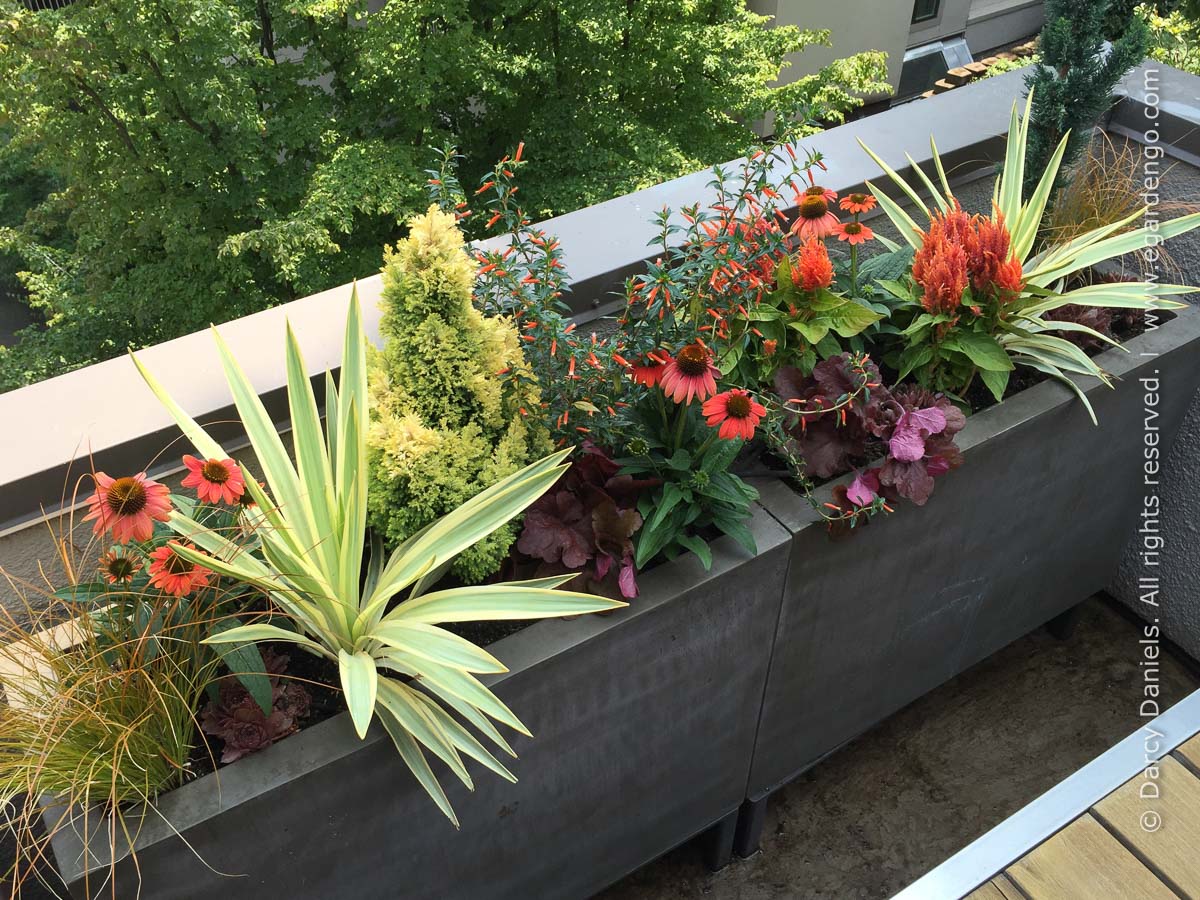
Whether it's an exuberantly overstuffed single pot or a grouping of multiple pots, successful container plantings—just like in-garden planting schemes—strive to strike a delicate balance. Enough repetition to create a harmonious whole, tempered by enough contrast and drama to excite without resulting in chaos.
Containers are already where a lot of garden drama happens, so a theatrical lens fits naturally here. Think of each planting as filling a role — once you know which role you're casting for, the plant choices start to make themselves. Here are four I come back to again and again. And now, on with the show!
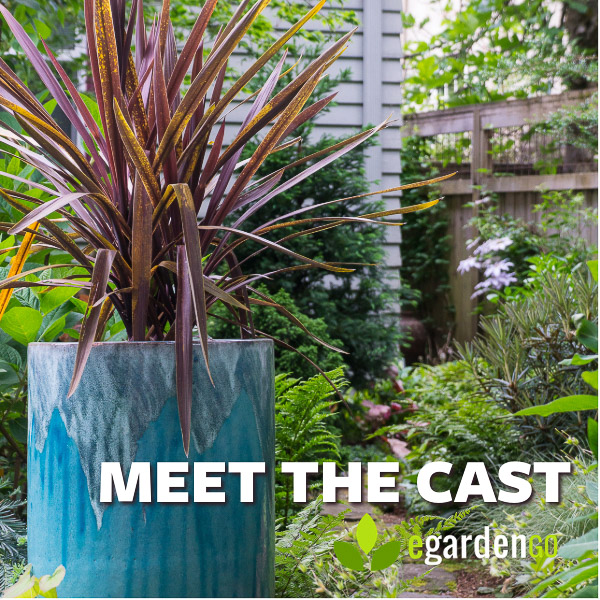
Design a Container Garden with Drama MEET THE CAST OF PLAYERS
A single specimen, shown to best advantage
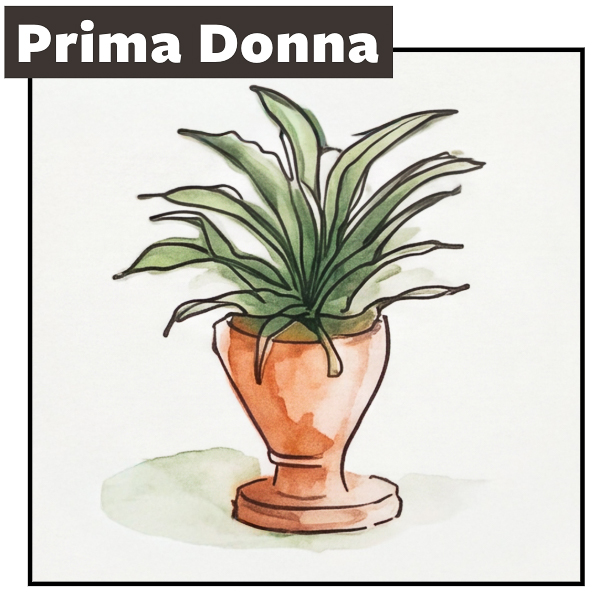
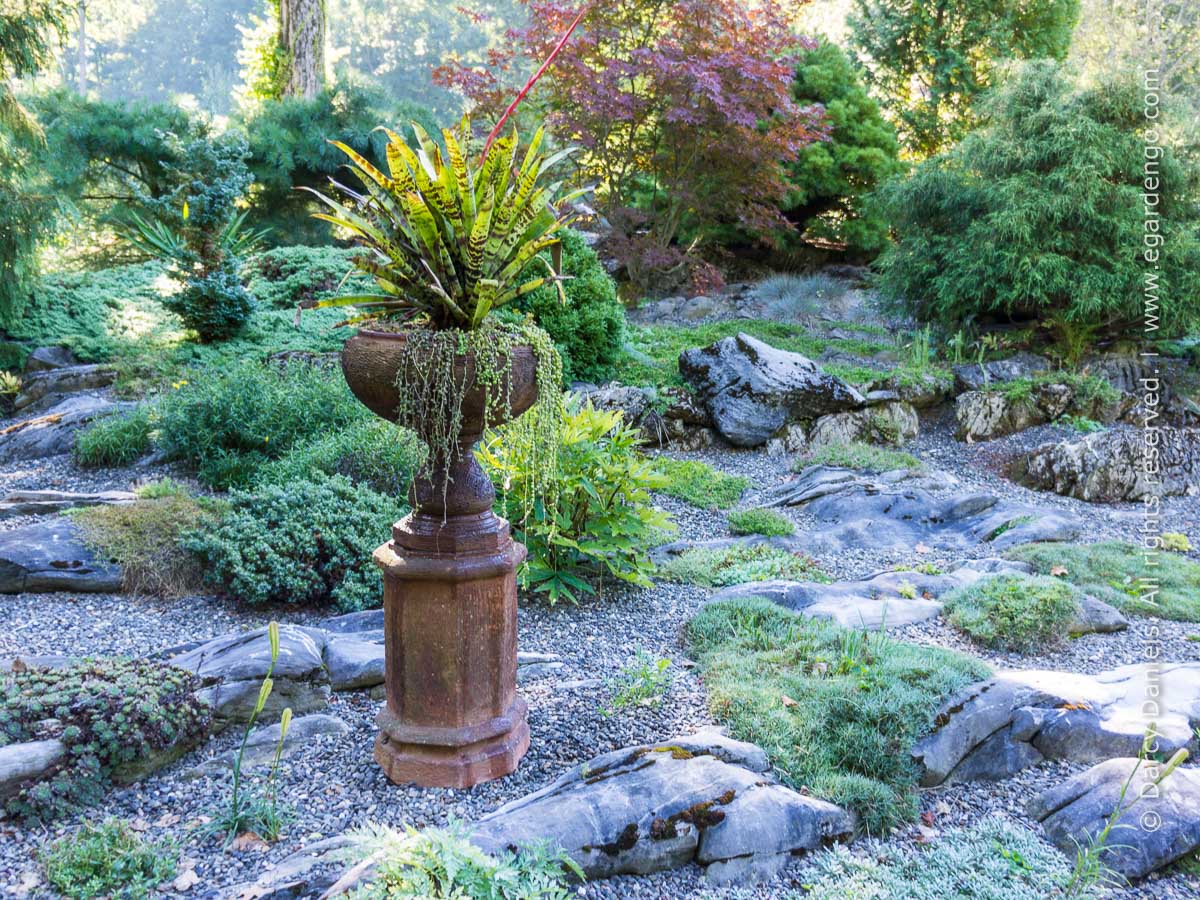
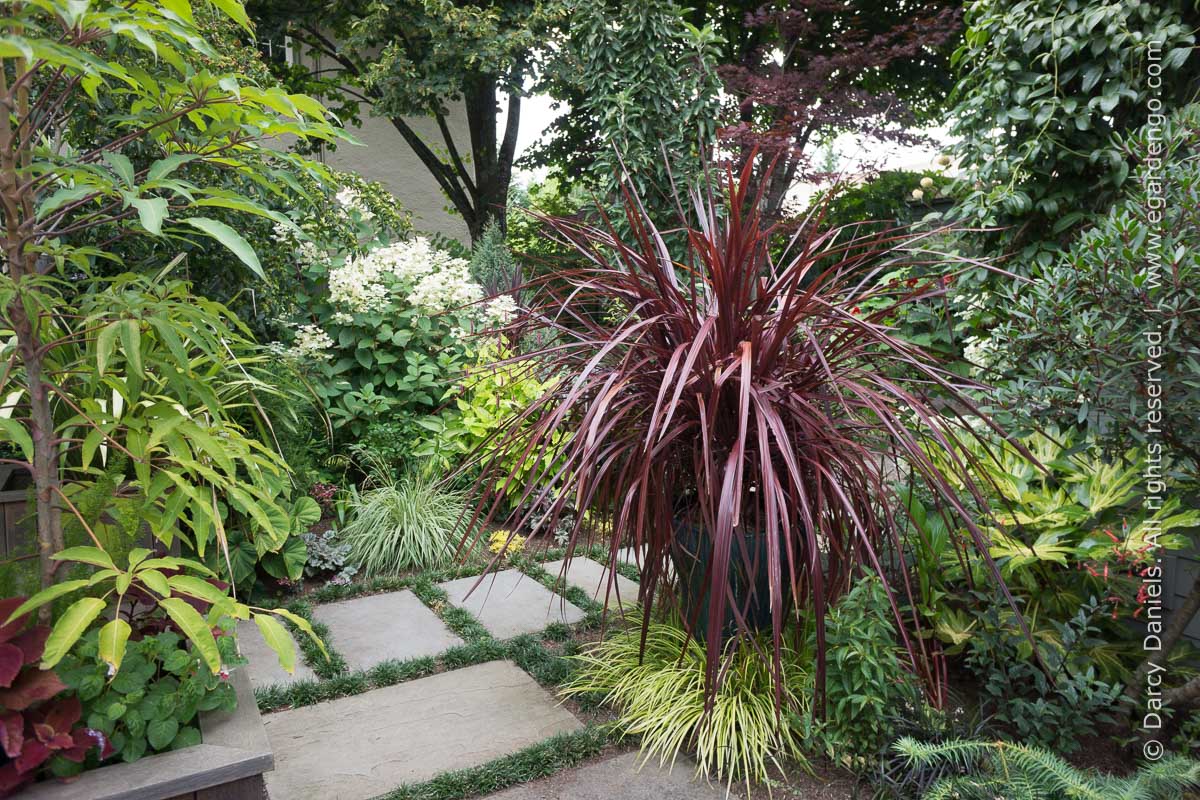
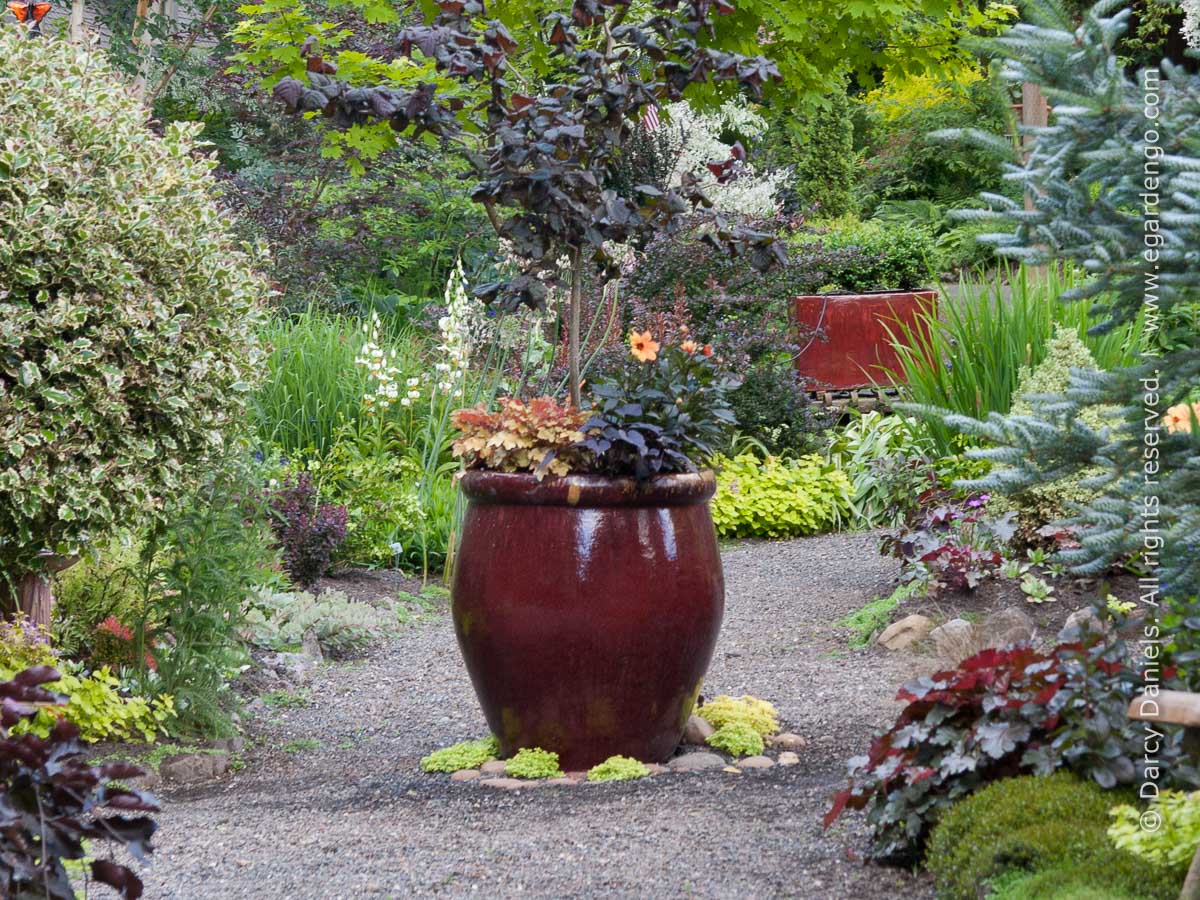
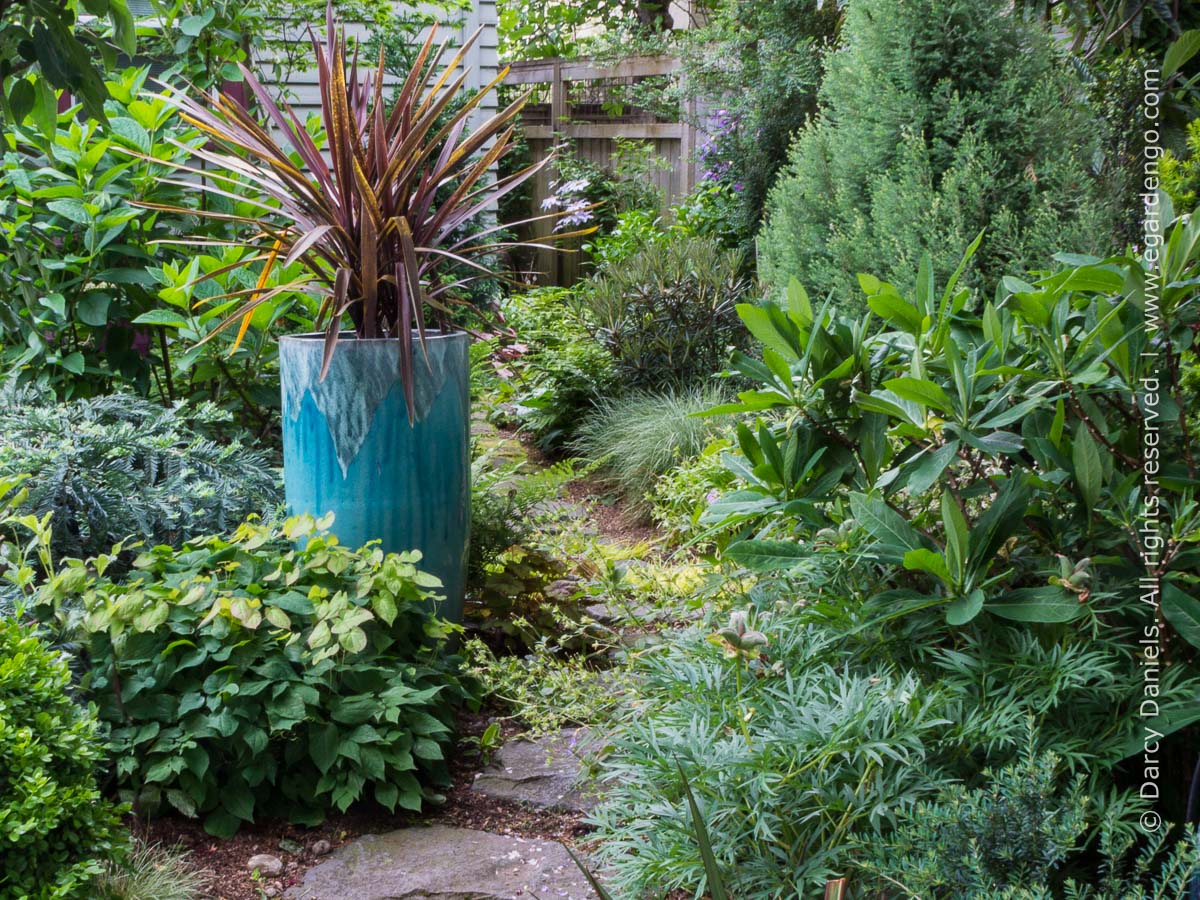
These are the plants that don't do well playing second fiddle — striking enough to go it alone in a pot, and more than a little prone to making a spectacle of themselves. Cordyline, phormium, yucca, agave, ornamental grasses, cannas, colocasia — big leaves, strong verticals, the kind of tropical-look foliage that commands the whole scene from across the garden, whether or not it's actually hardy here. Position matters as much as the plant — center it where a path bends, elevate it on a pedestal, put it wherever the eye naturally lands. Or skip the plant casting altogether and let the urn itself be the star — a big enough pot, in the right spot, is a focal point whether or not anything's growing in it. A gallery of real Prima Donnas follows below, including the giant urn I still think about — the one that got away.
Performance: stronger together than alone
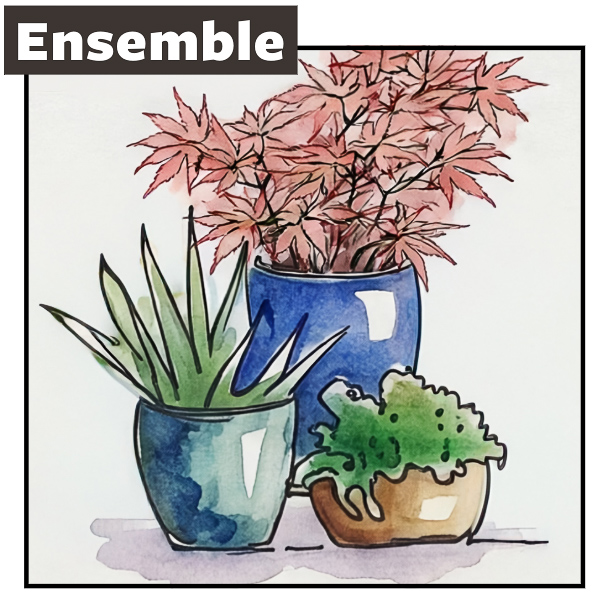
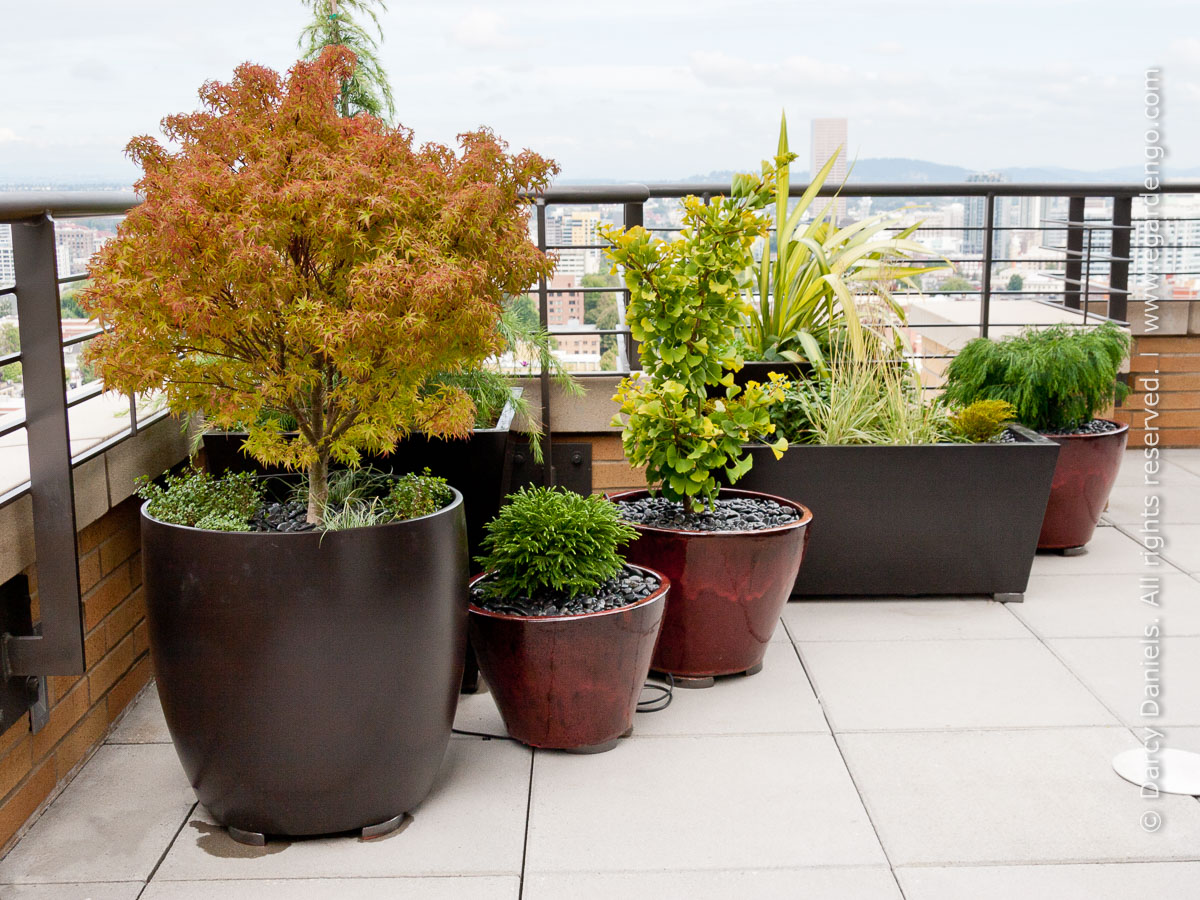
Growing plants in containers allows you to audition plants and combinations before adding them to your in-ground garden. Group several one-plant-per-pot specimens together and you get a garden vignette that focuses solely on color, texture, and form — an artful scene, free from having to make sure everything's a match in terms of growing conditions. This is a wonderful way to bring order to a collector's garden, especially effective when the containers share a theme or color scheme. Vary the height and habit within the group — one upright anchor, then something rounder or trailing around it — so the eye knows where to land first. An added benefit: you can bulk up slower-growing, rare, or more costly plants, giving them more care and coddling before expecting them to fend for themselves, jostling for position out in the garden jumble. Below, a gallery of real ensembles, including one built entirely around a shared chocolate-silver-yellow palette.
I go deeper on the auditioning idea — dwarf conifers, redbuds, a Eucryphia I'm still getting to know — in a recent video, Auditioning Plants in Containers:
Create pattern, divide space, establish rhythm
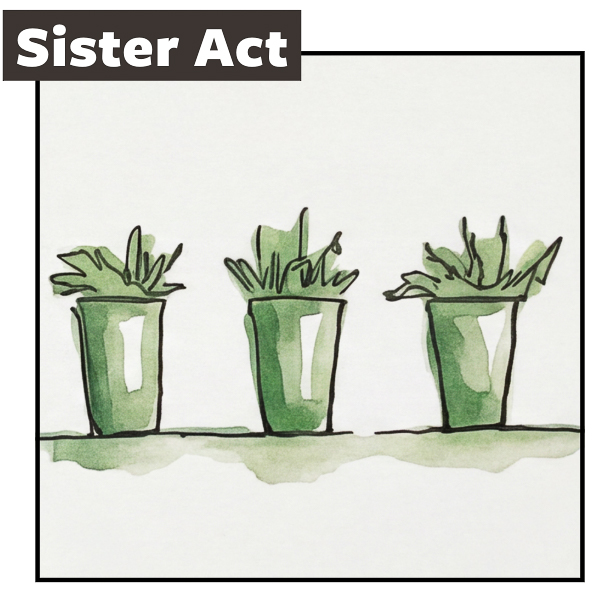
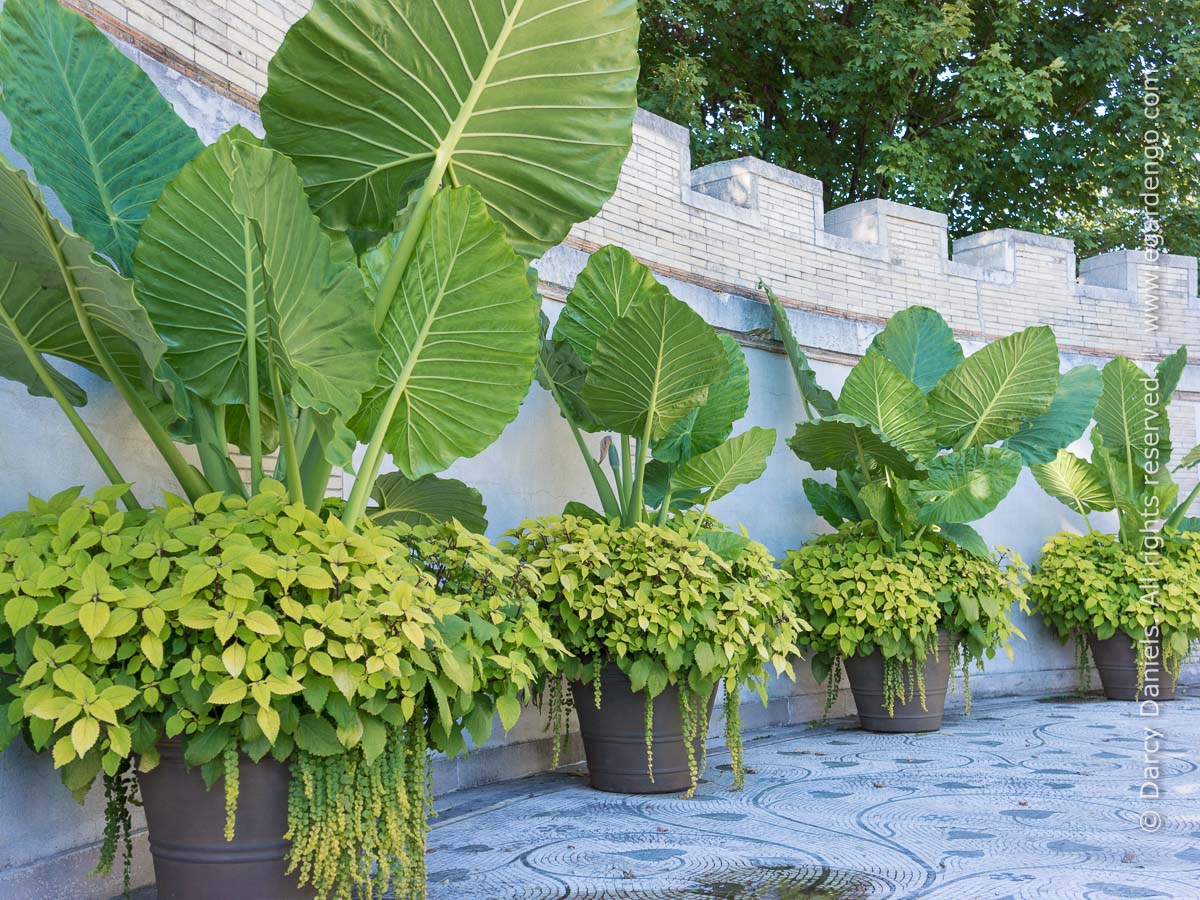
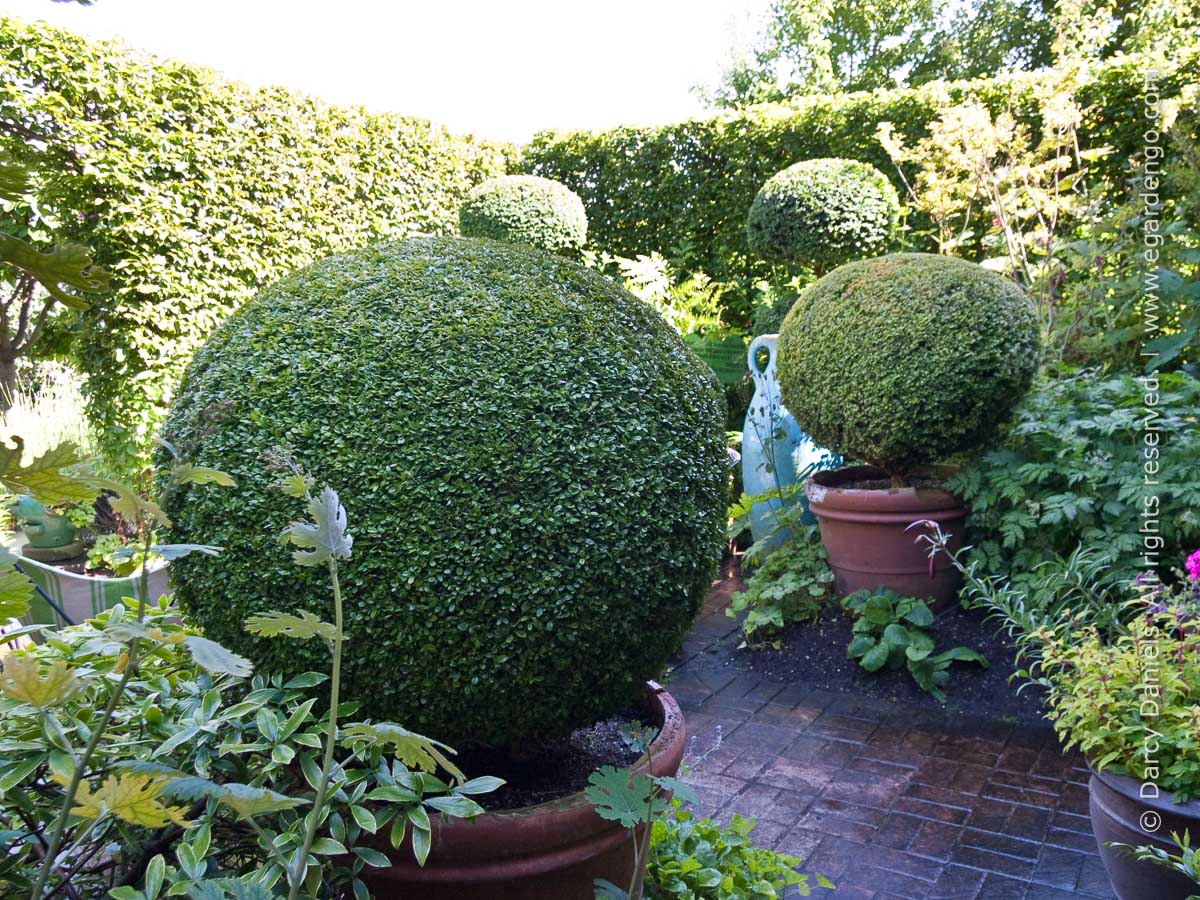
Repetition creates pattern, and pattern is what turns a handful of pots into a chorus line — a row of individuals, in step and in sync, doing the same thing together. Line up a run of matching pots and you get an instant sculptural element: siblings in matching outfits, singing the same song, whether it's a series of containers dividing space or a pair flanking a doorway. Boxwood, ornamental grass, ferns, hebe, dwarf conifers, or any plant with a strong, repeatable form takes well to the role. Three reads as intentional; two can look accidental, and past five or six the rhythm starts to blur into a crowd — find the count that holds the pattern without losing it. You can try this big or small—imagine a row of succulents down the middle of a table versus a row of plants in tall pots to provide privacy—same concept, different scale. There's a gallery of real examples below, everything from a kick line of tropical foliage to a row of clipped boxwood spheres.
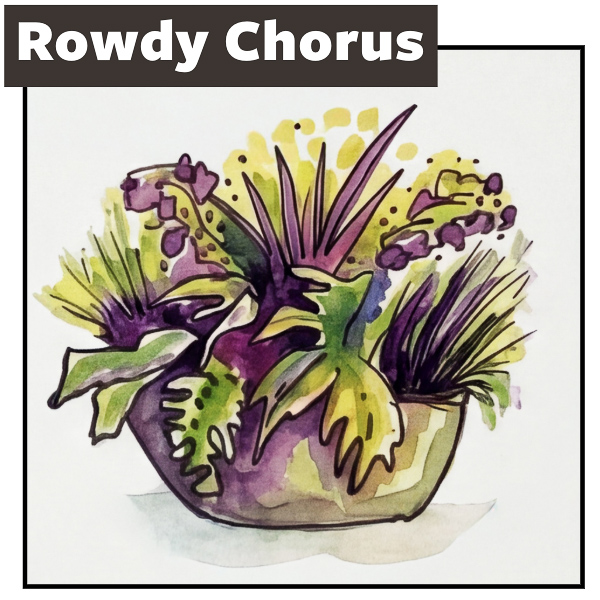
Rowdy & rambunctious—a veritable party in a pot
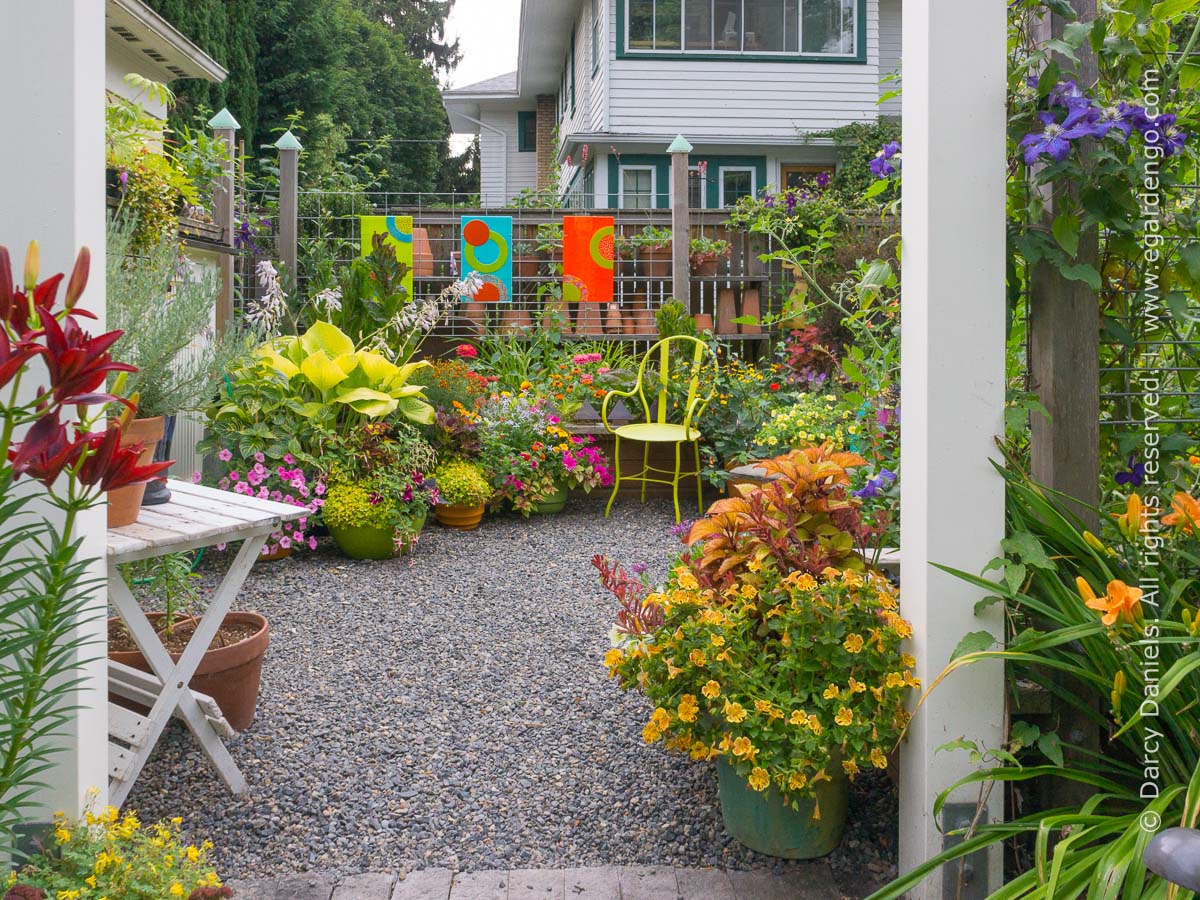
This treatment is best suited to one-season plants such as flowering annuals and tender perennials. For example, tender foliage plants like coleus and potato vine; floriferous annuals like Calibrachoa, petunias, Cuphea; and the like. Select easy-care, long-blooming but self-cleaning, pest-resistant varieties that don't require a lot of fussy care. Do fertilize to keep the show going strong; cut back rampant growth as needed to keep the overall vignette in balance; and remove and replace (if needed) any plants that peter out before the end of the season. But mostly, keep the water and fertilizer steady, and stand back! A gallery of real rowdy choruses follows below — zippy oranges included.
I try to be pretty choosy about what I plant in my garden. One of the things that I love most about containers is the freedom and flexibility they afford
me to say "yes!" to the new plants that I'm constantly tempted by. I will often try a plant out in a container before allowing it access to the garden
proper. Not infrequently, that's as far as the relationship goes. My curiosity sated; my garden intact.
For a look at Prima Donna and Rowdy Chorus playing out in my own garden right now, here's a recent video from the small-garden series:
IN THE GARDEN—The Prima Donna
A simple but dramatic duo of foliage plants elevated on an artful pedestal create an in-the-garden focal point. (Design credit: Rockland Farm, Canaan, NY)
A simple but dramatic duo of foliage plants elevated on an artful pedestal create an in-the-garden focal point. (Design credit: Rockland Farm, Canaan, NY)
I've been growing this Cordyline x 'JURed' for at least a dozen years in my home garden. Planted in a solo container, it's shown
to best advantage, but it also makes it easier to transport to a protected spot during the worst part of winter.
I've been growing this Cordyline x 'JURed' for at least a dozen years in my home garden. Planted in a solo container, it's shown
to best advantage, but it also makes it easier to transport to a protected spot during the worst part of winter.
More important than how it's planted (in more of a rowdy chorus style) is the position and size, that's what makes this
container a Prima donna. This large red container, situated in the center of an enlarged section of the path, commands
attention and signals a change of pace, encouraging garden visitors to slow down and observe. (Design credit: Froggy Hollow Garden, Vancouver, WA)
More important than how it's planted (in more of a rowdy chorus style) is the position and size, that's what makes this
container a Prima donna. This large red container, situated in the center of an enlarged section of the path, commands
attention and signals a change of pace, encouraging garden visitors to slow down and observe. (Design credit: Froggy Hollow Garden, Vancouver, WA)
A simple specimen in a colorful container invites exploration, it draws the eye and the body follows—walk this way. (Design credit: Darcy Daniels, Bloomtown Gardens, Portland, OR)
A simple specimen in a colorful container invites exploration, it draws the eye and the body follows—walk this way. (Design credit: Darcy Daniels, Bloomtown Gardens, Portland, OR)
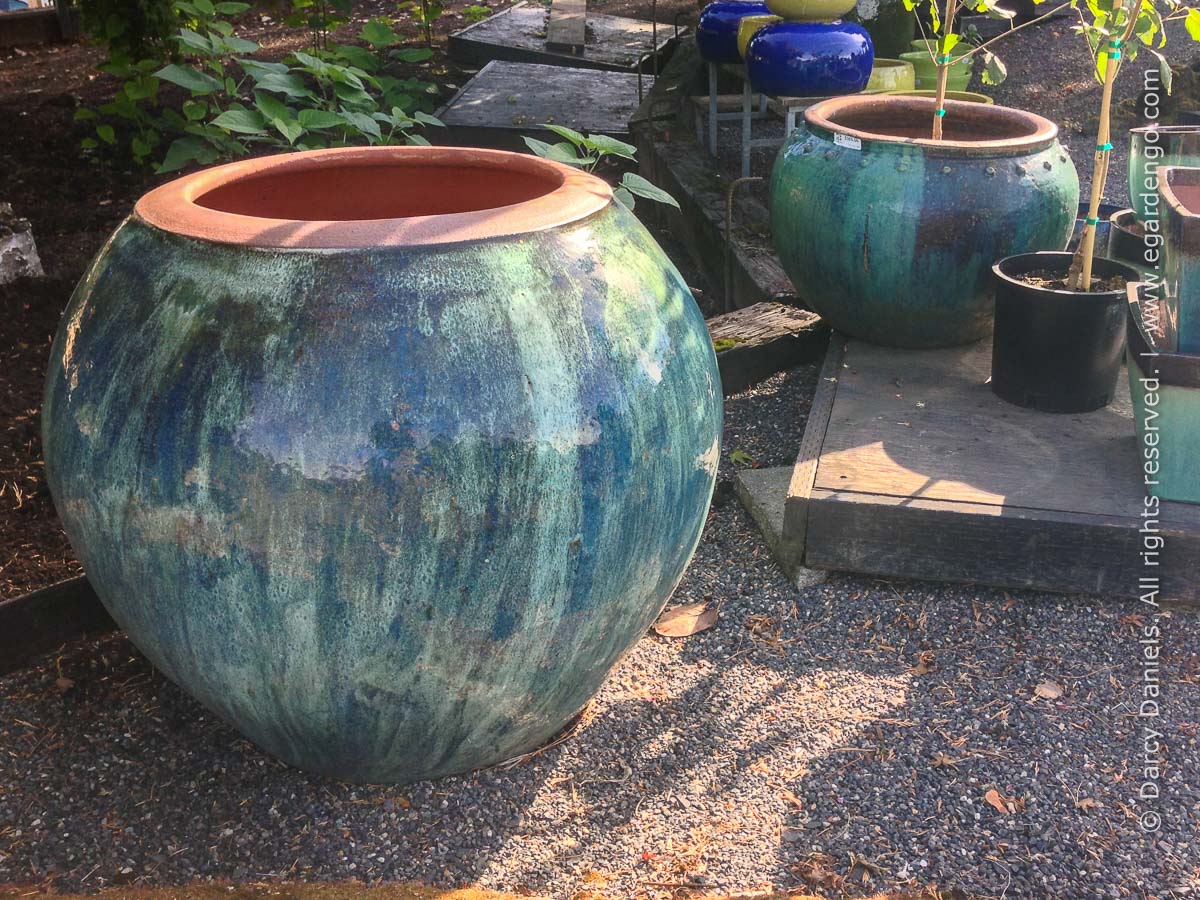
The one that got away—for months I lusted after this enormous urn when it was being displayed at one of my favorite garden
centers (at Cornell Farm,
which always has a wonderful selection of containers). I'm confident that it found its forever home. But alas, I had no room
(nor budget) for it in my home garden, though I tried to get more than one client to take the bait and see the potential in
a piece like this—an instant focal point, planted or not. Keep your eye out and be ready to act if you see a special
container that captures your heart.
The one that got away—for months I lusted after this enormous urn when it was being displayed at one of my favorite garden
centers (at Cornell Farm,
which always has a wonderful selection of containers). I'm confident that it found its forever home. But alas, I had no room
(nor budget) for it in my home garden, though I tried to get more than one client to take the bait and see the potential in
a piece like this—an instant focal point, planted or not. Keep your eye out and be ready to act if you see a special
container that captures your heart.
IN THE GARDEN—The Ensemble Cast
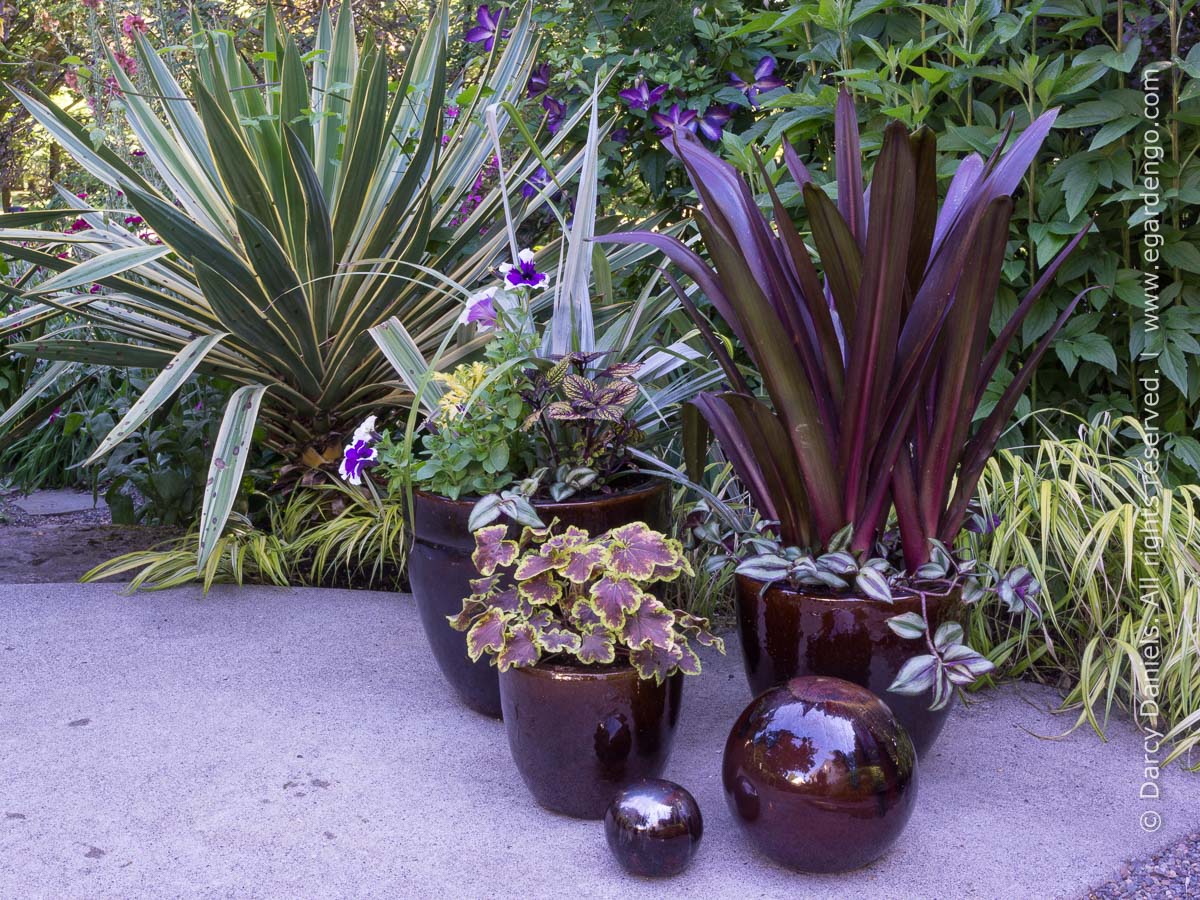
This ensemble performance features strong shapes, bold and colorful foliage within a restrained chocolate, silver and yellow color
scheme and is framed by the striking but simple foliage in the surrounding garden beds. (Design credit: Linda Ernst, Dancing Ladies Garden, Portland, OR)
This ensemble performance features strong shapes, bold and colorful foliage within a restrained chocolate, silver and yellow color
scheme and is framed by the striking but simple foliage in the surrounding garden beds. (Design credit: Linda Ernst, Dancing Ladies Garden, Portland, OR)
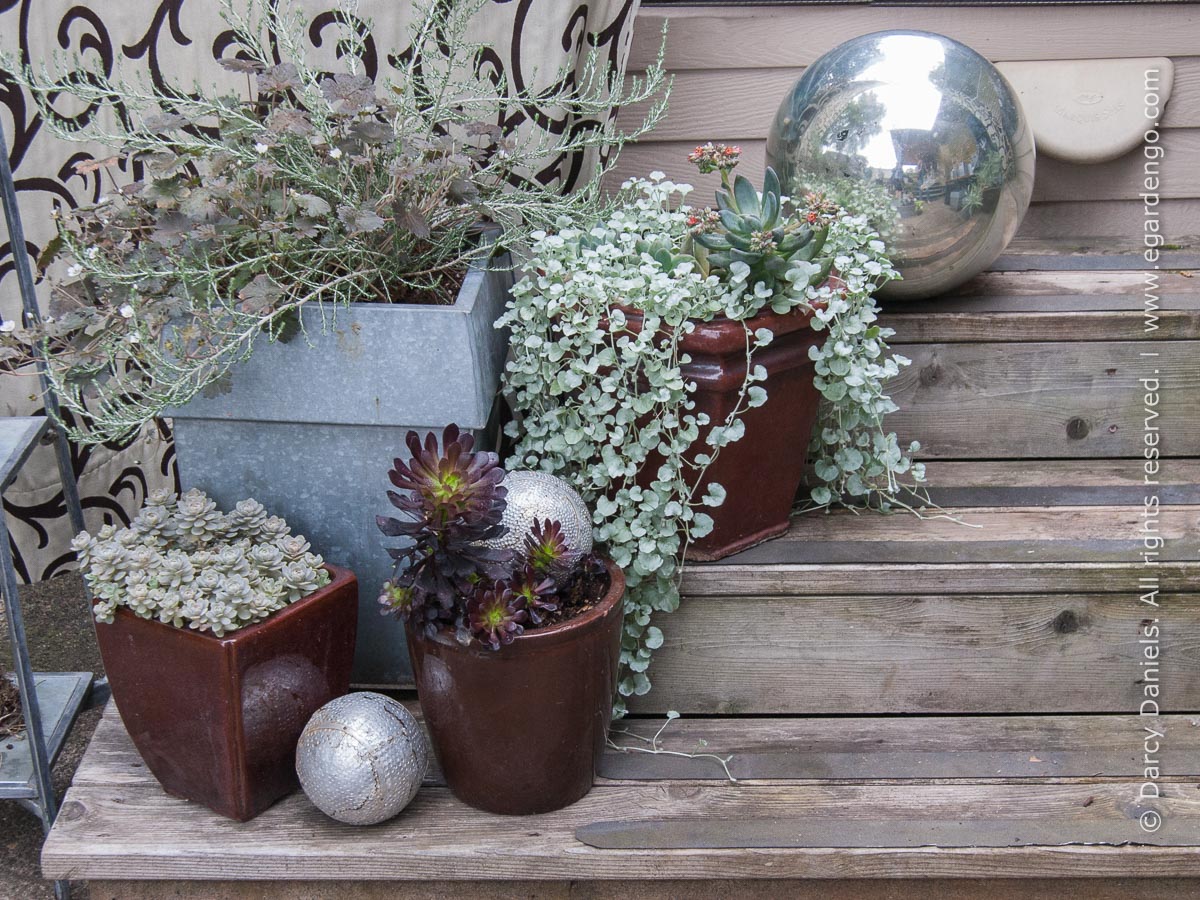
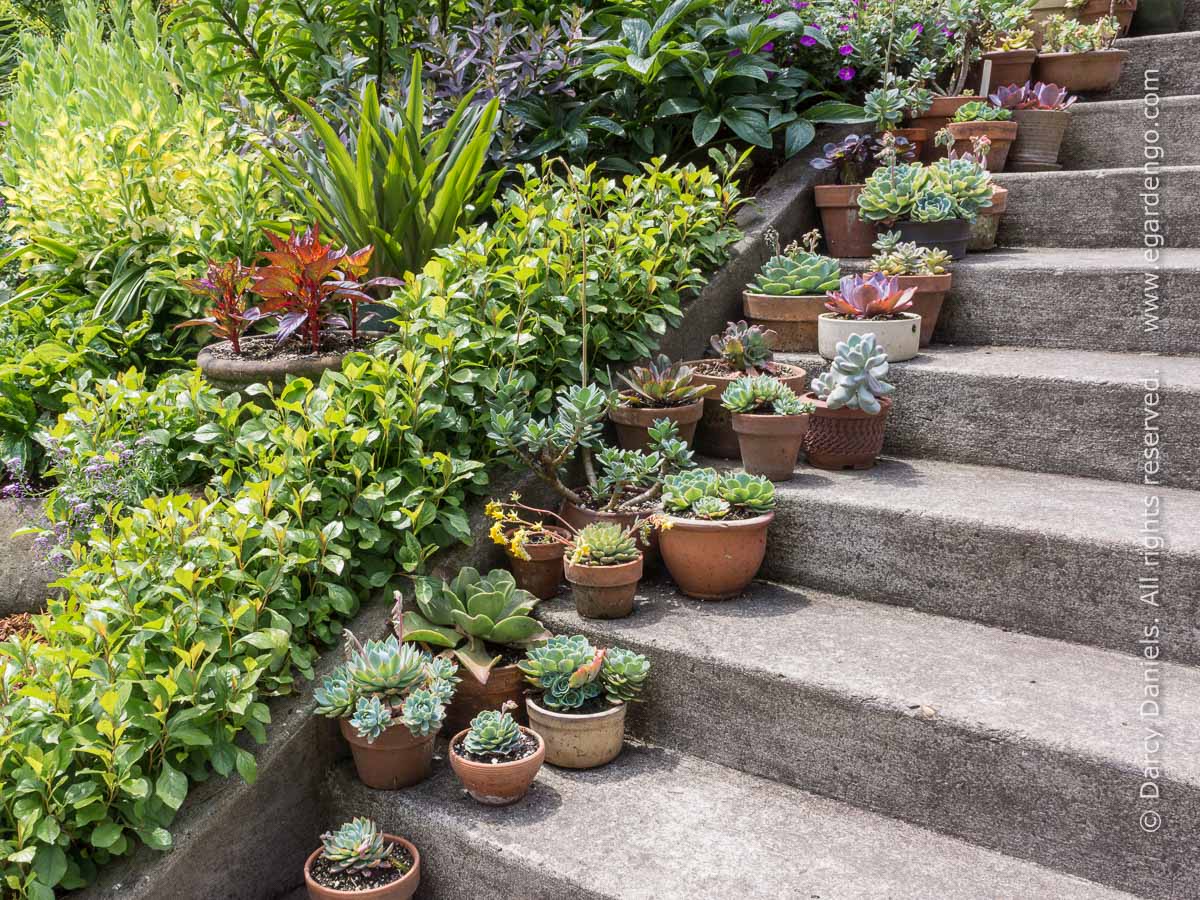
A themed collection of small containers, plants and objects in mahogany and silver decorate these steps. (Design credit: Susan Fries, Portland, OR)
A themed collection of small containers, plants and objects in mahogany and silver decorate these steps. (Design credit: Susan Fries, Portland, OR)
A riot of annual blooms, in bright and cheery colors, overflow from this collection of pots. The color theme is echoed in the accessories,
including the art glass crafted by the garden owner hanging on mesh screen toward the back. (Design credit: Linda Ernst, Dancing Ladies Garden, Portland, OR)
A riot of annual blooms, in bright and cheery colors, overflow from this collection of pots. The color theme is echoed in the accessories,
including the art glass crafted by the garden owner hanging on mesh screen toward the back. (Design credit: Linda Ernst, Dancing Ladies Garden, Portland, OR)
These low maintenance, foliage-focused, plants were selected to create a pleasing seasonal progression in a vignette comprised
of several one-plant-per-pot specimens. (Design credit: Darcy Daniels, Bloomtown Gardens, Portland, OR)
These low maintenance, foliage-focused, plants were selected to create a pleasing seasonal progression in a vignette comprised
of several one-plant-per-pot specimens. (Design credit: Darcy Daniels, Bloomtown Gardens, Portland, OR)
IN THE GARDEN—The Sister Act
Va va voom! Like glam Rockettes, this kickline of showy, synchronized, tropical foliage keeps us entertained. (Design credit: Untermyer Garden, Yonkers, NY)
Va va voom! Like glam Rockettes, this kickline of showy, synchronized, tropical foliage keeps us entertained. (Design credit: Untermyer Garden, Yonkers, NY)
Repeated shapes in simple terra cotta pots—these clipped boxwood spheres are a strong presence. (spotted on garden tour, HPSO Study Weekend 2010)
Repeated shapes in simple terra cotta pots—these clipped boxwood spheres are a strong presence. (spotted on garden tour, HPSO Study Weekend 2010)
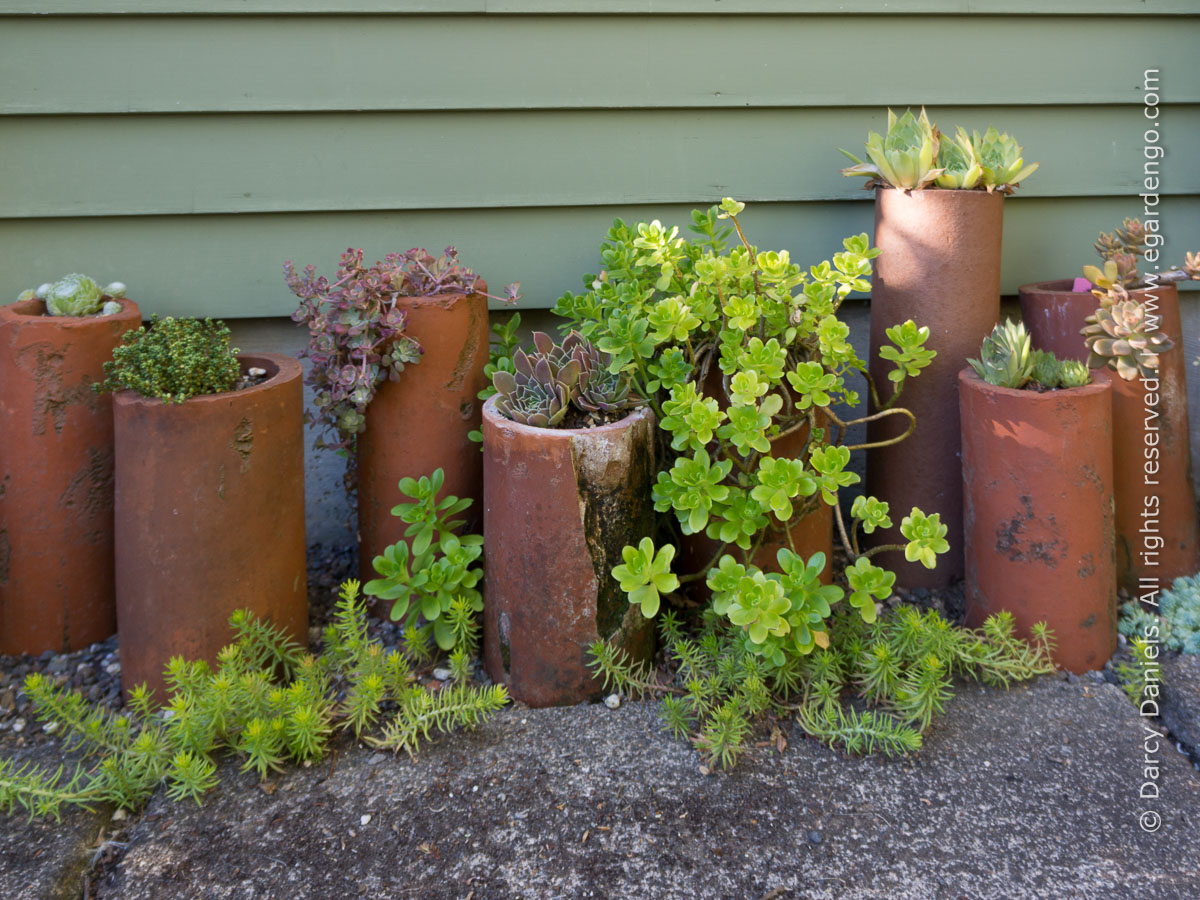
A collection of salvaged terra cotta pipes provide the means to grow plants in an otherwise inhospitable and awkward space, while
adding a bit of structure and a touch of whimsy. (Design credit: Jenn Ferrante, Portland, OR)
A collection of salvaged terra cotta pipes provide the means to grow plants in an otherwise inhospitable and awkward space, while
adding a bit of structure and a touch of whimsy. (Design credit: Jenn Ferrante, Portland, OR)
This collection of succulents lead the way— though the individual pots are small and would risk being lost if too few were
on display, en masse as shown here, they read as one entity and make sense. (Design credit: Bruce Hegna, Portland, OR)
This collection of succulents lead the way— though the individual pots are small and would risk being lost if too few were
on display, en masse as shown here, they read as one entity and make sense. (Design credit: Bruce Hegna, Portland, OR)
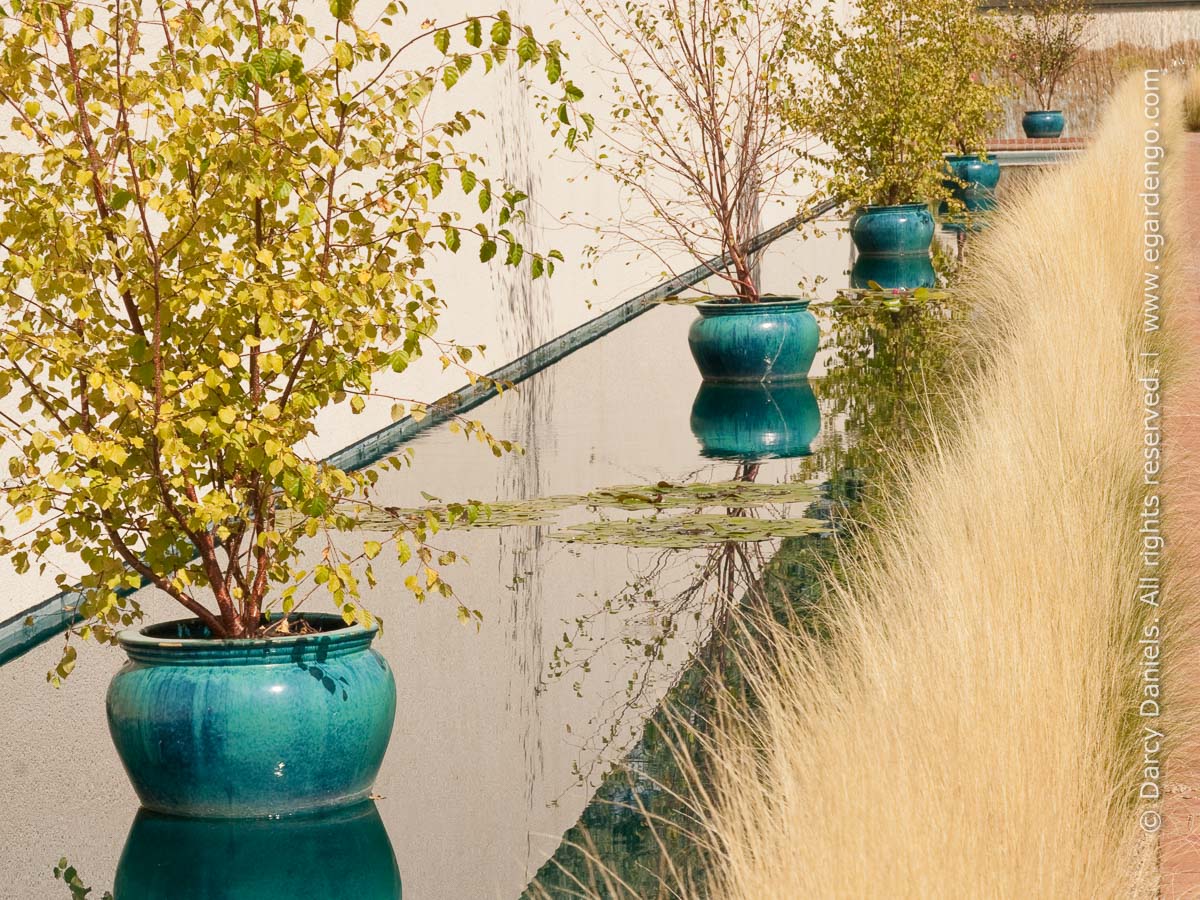
One of my favorite sections at the Denver Botanic Garden, I've been visiting this garden since 2005 (pictured) and I love seeing
the changes each visit. This visit was in late summer/early fall, and the Mexican feather grass was dry and tawny-hued.
One of my favorite sections at the Denver Botanic Garden, I've been visiting this garden since 2005 (pictured) and I love seeing
the changes each visit. This visit was in late summer/early fall, and the Mexican feather grass was dry and tawny-hued.
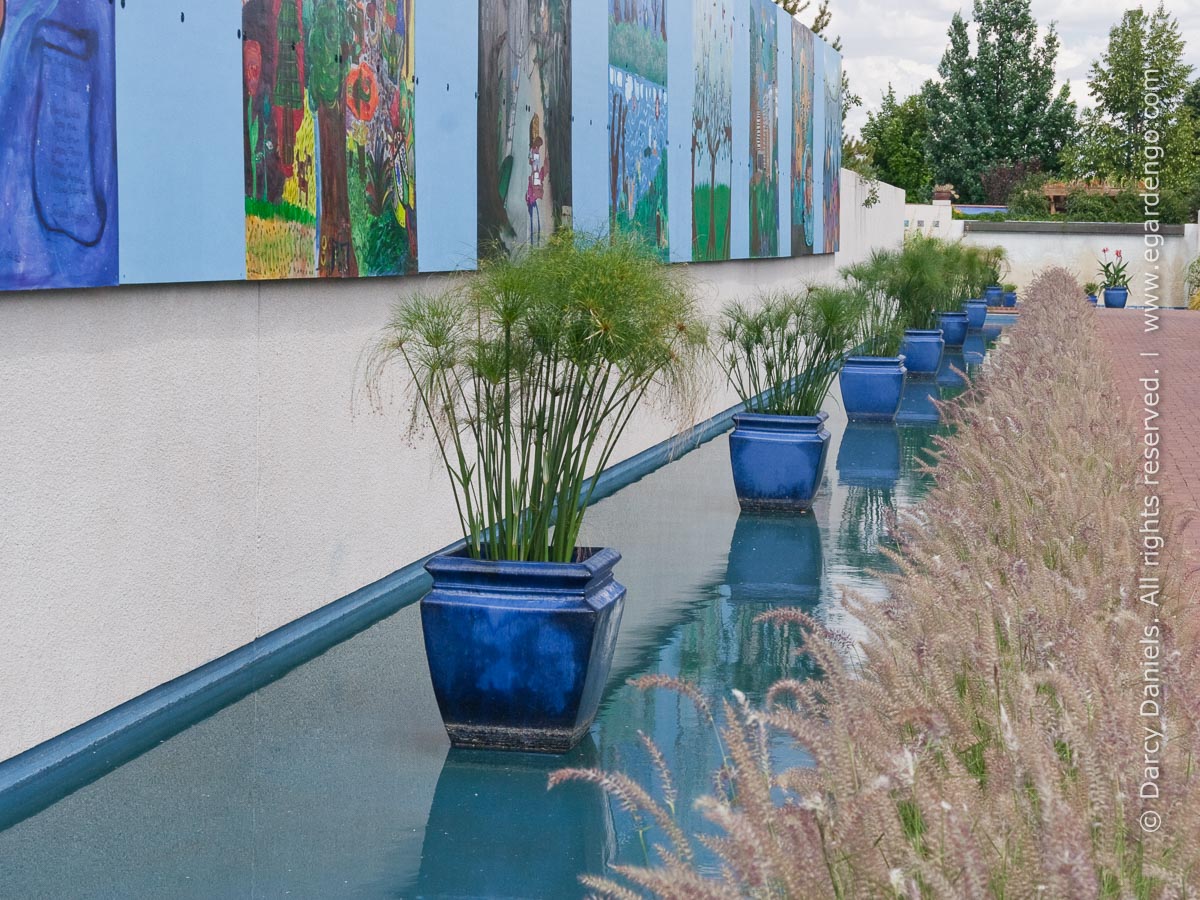
Denver Botanic Garden—2008: Blue on blue on blue; in the pots, exotic plumes of Cyperus papyrus lend a tropical
vibe; and oh that fountain grass en masse!
Denver Botanic Garden—2008: Blue on blue on blue; in the pots, exotic plumes of Cyperus papyrus lend a tropical
vibe; and oh that fountain grass en masse!
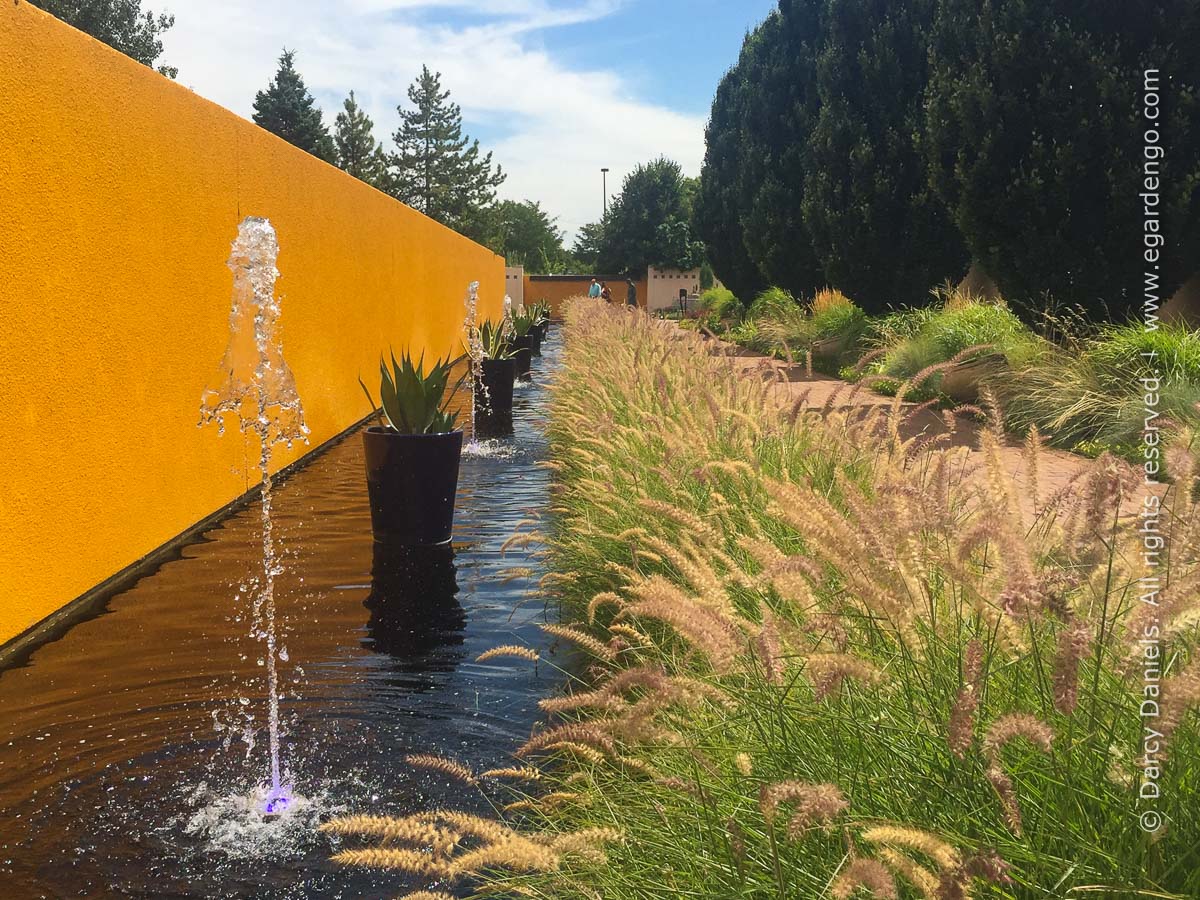
Denver Botanic Garden—2017: Agaves in black pots, against a sunny-hued wall, surrounded by cooling water and flowing Pennisetum orientale.
Denver Botanic Garden—2017: Agaves in black pots, against a sunny-hued wall, surrounded by cooling water and flowing Pennisetum orientale.
IN THE GARDEN—The Rowdy Chorus
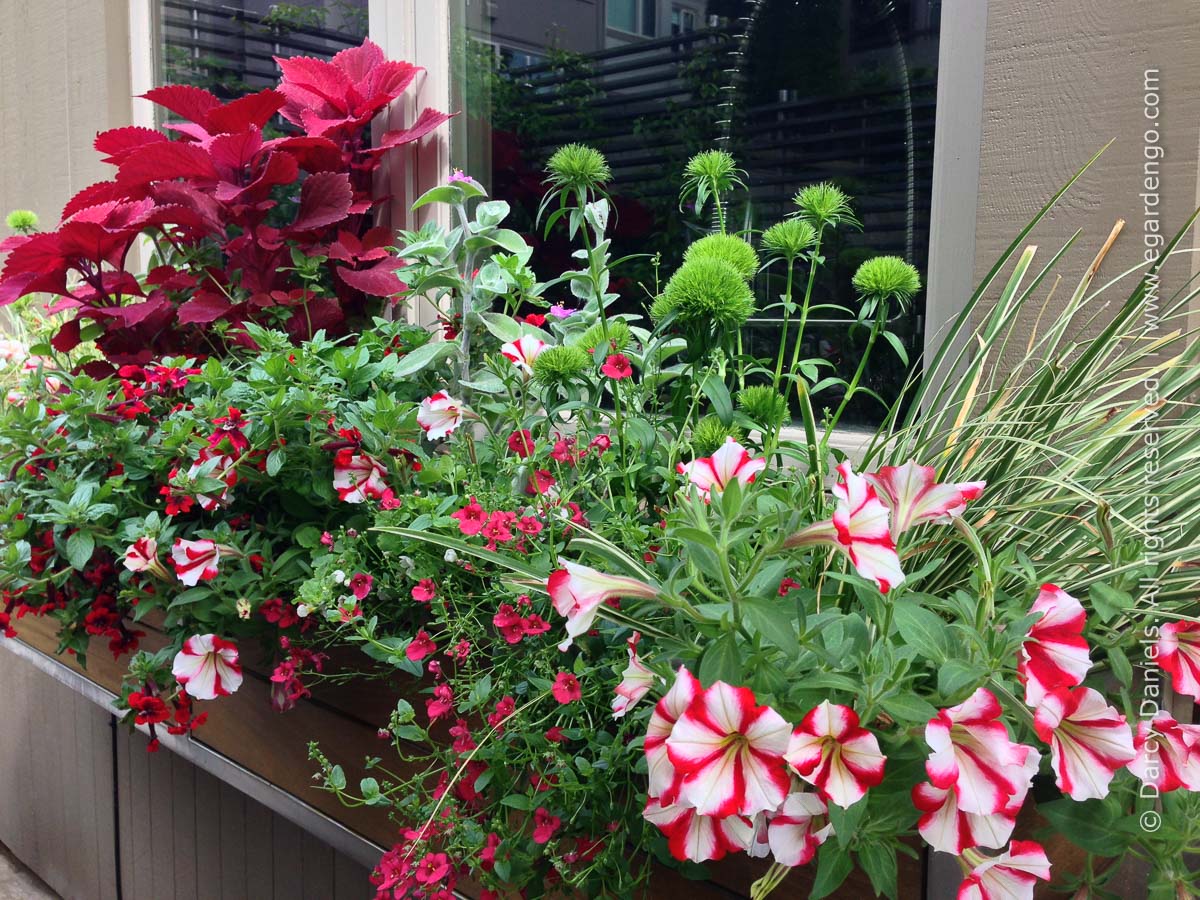
Crazy and fun—pin-wheel patterned petunias, red-flowering diascia and cuphea, curious green-flowering dianthus, with red
coleus and white variegated grasses. (Design credit: Darcy Daniels, Bloomtown Garden, Portland, OR)
Crazy and fun—pin-wheel patterned petunias, red-flowering diascia and cuphea, curious green-flowering dianthus, with red
coleus and white variegated grasses. (Design credit: Darcy Daniels, Bloomtown Garden, Portland, OR)
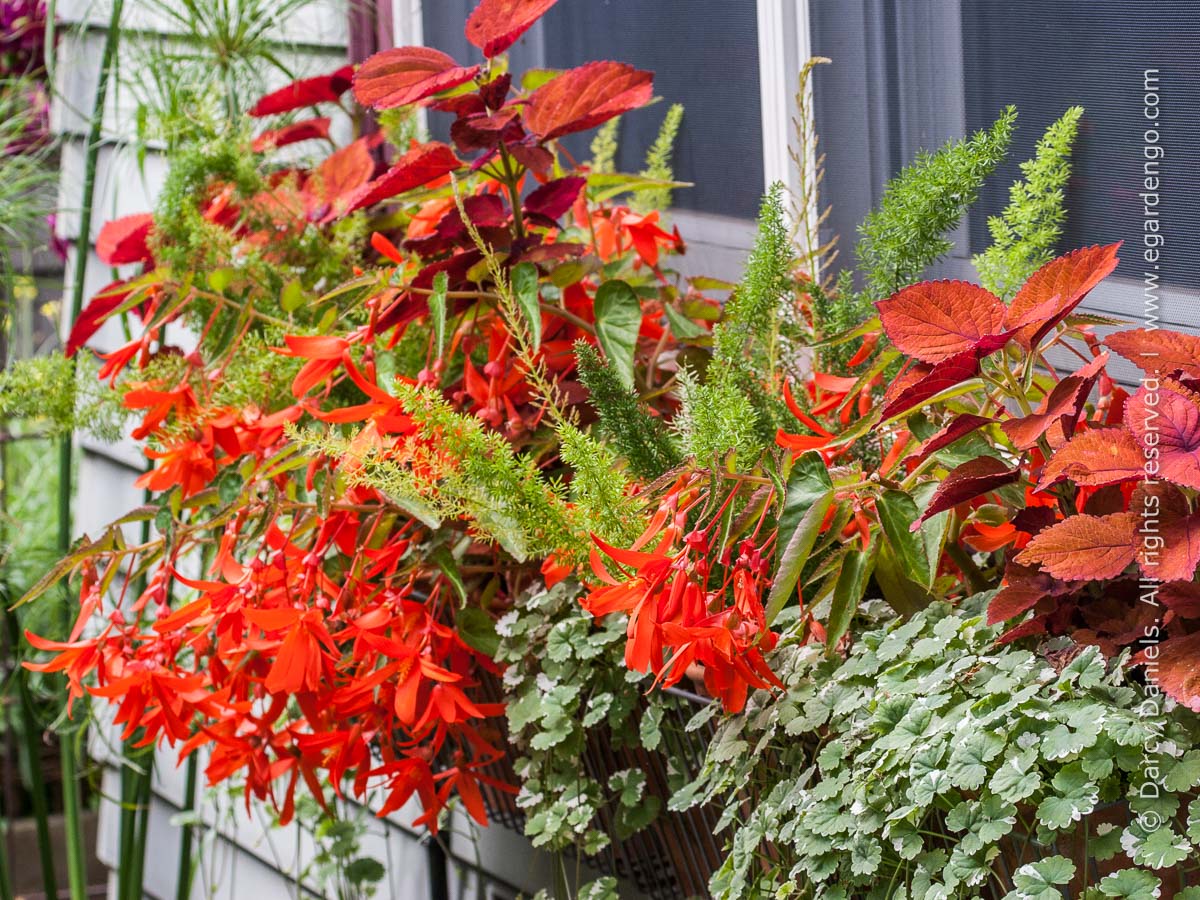
Red, yellow and orange annual flowers, paired with showy foliage, exude a tropical vibe. (Design credit: Susan Fries, Portland, OR)
Red, yellow and orange annual flowers, paired with showy foliage, exude a tropical vibe. (Design credit: Susan Fries, Portland, OR)
Zippy orange extravaganza—this party in a pot blooms all summer. (Design credit: Darcy Daniels, Bloomtown Garden, Portland, OR)
Zippy orange extravaganza—this party in a pot blooms all summer. (Design credit: Darcy Daniels, Bloomtown Garden, Portland, OR)
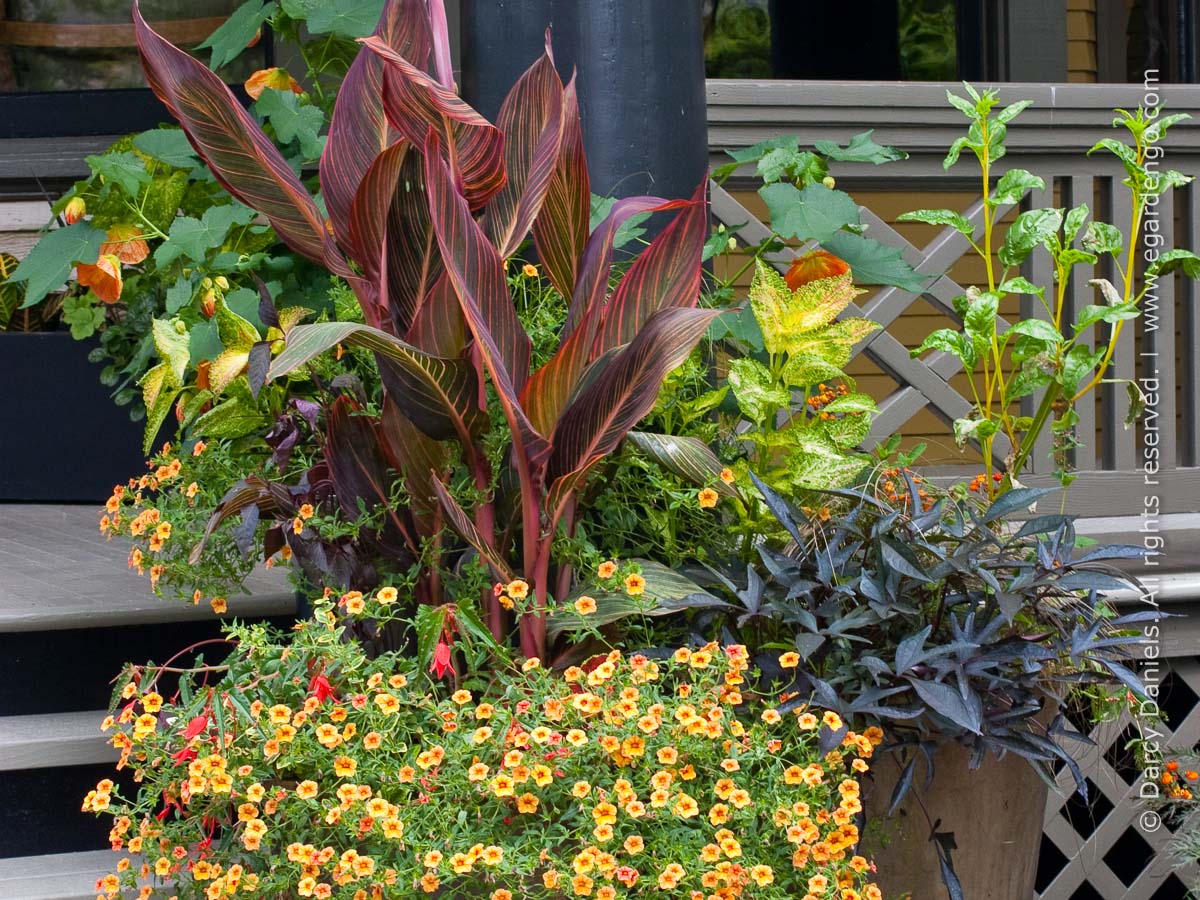
Colorful and fun, this container vignette has structural plants that will last multiple seasons. When the blooms are spent, they'll be stripped away and new flowering
plants will be added around the plants that remain. (Design credit: Darcy Daniels, Bloomtown Gardens, Portland, OR)
Colorful and fun, this container vignette has structural plants that will last multiple seasons. When the blooms are spent, they'll be stripped away and new flowering
plants will be added around the plants that remain. (Design credit: Darcy Daniels, Bloomtown Gardens, Portland, OR)
Terms And Conditions Of Use. All content provided on this site is for informational purposes only. The owner of this blog makes no representations as to the accuracy or completeness of any information on this site or found by following any link on this site. The owner of www.egardengo.com will not be liable for any errors or omissions in this information nor for the availability of this information. The owner will not be liable for any losses, injuries, or damages from the display or use of this information. This terms and conditions is subject to change at anytime with or without notice.