Fatsia Japonica

Japanese Aralia, Japanese Fatsia, False Castor Oil Plant

Evergreen Shrub

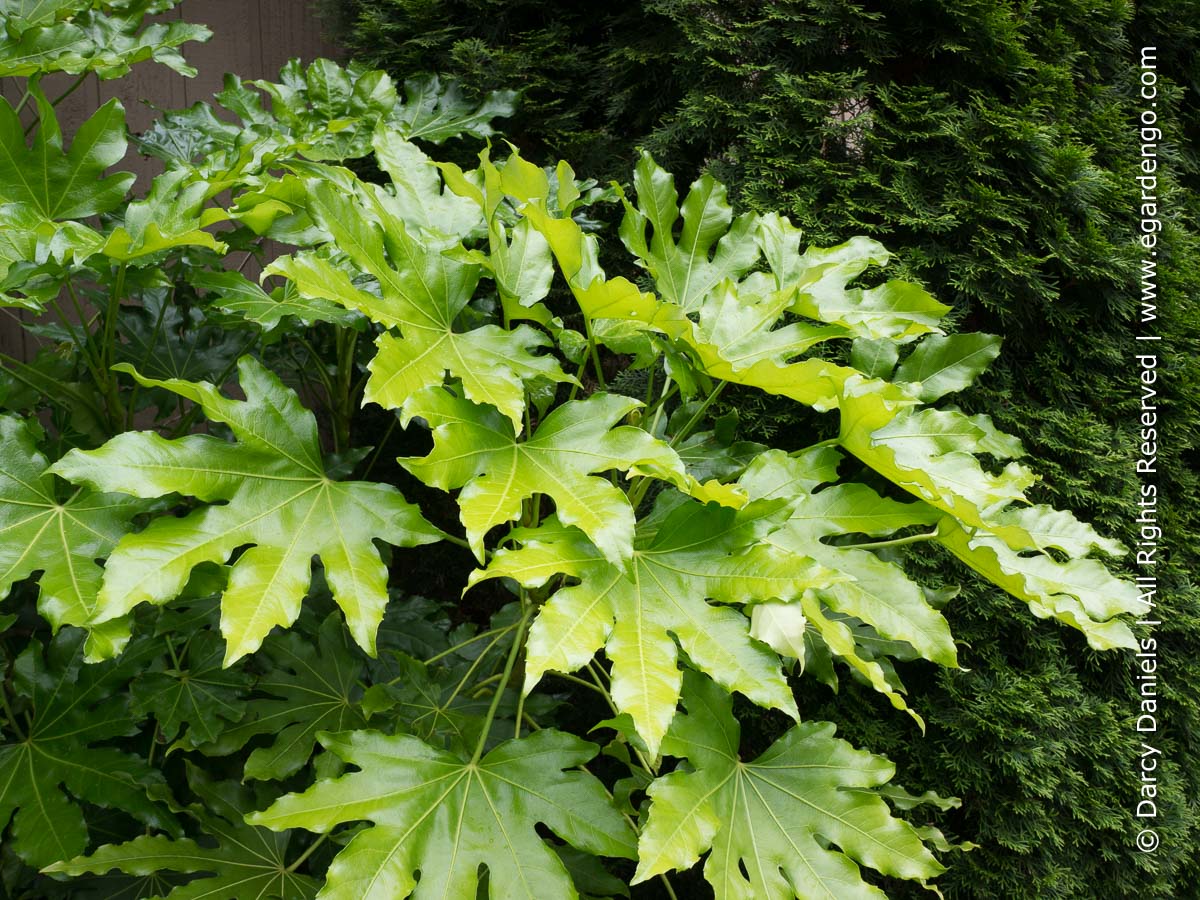
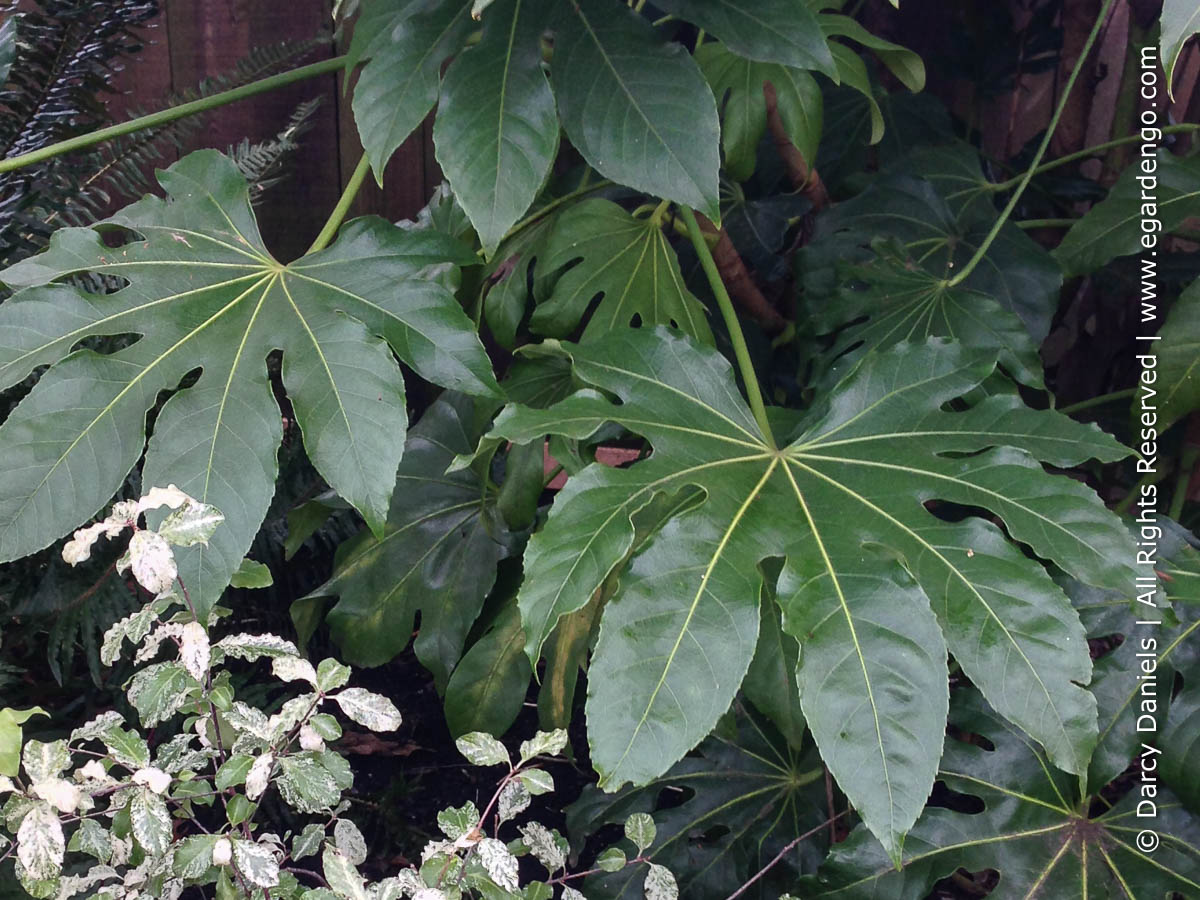
Few plants earn their keep in shade the way Fatsia japonica does. The leaves alone make the case: deeply lobed, palm-shaped, and glossy dark green, they can reach 16 inches across—bold enough to catch the eye from a distance, architectural enough to anchor a planting for all four seasons. This is a shrub that does real structural work in a garden.

In the Pacific Northwest, where shade often means dry shade under conifers or the dim side of a house, fatsia comes through. It handles everything from open shade to deep shade, tolerates drought once established, and shrugs off urban conditions—poor soil, air pollution, even salt near the coast. Zone 7 through 10, so well within range for most western Oregon and Washington gardens.

Size varies: 6 to 10 feet tall and wide is typical in regional gardens, though it can go larger in time. Worth knowing before you plant it close to a path. If it outgrows its space, fatsia takes pruning well—cut it back in spring and it rebounds quickly.

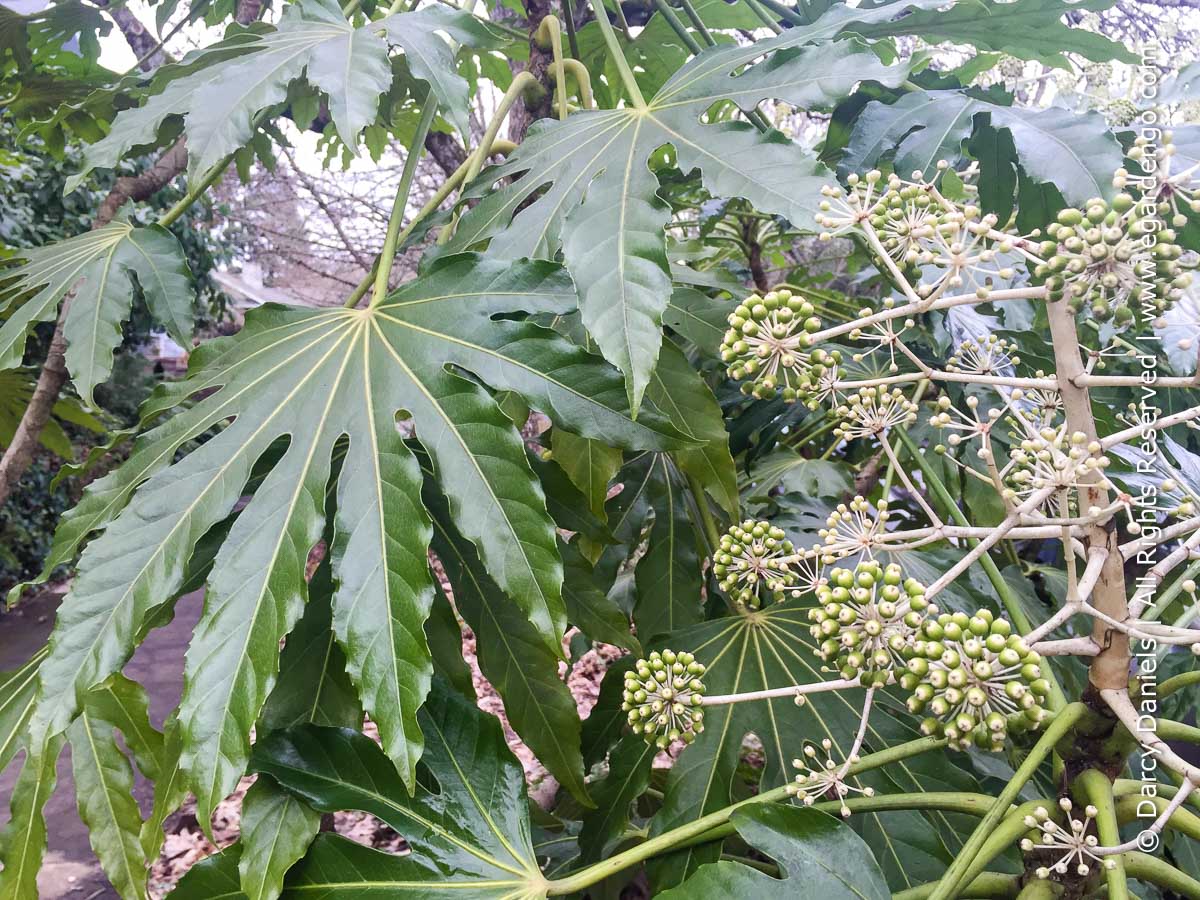
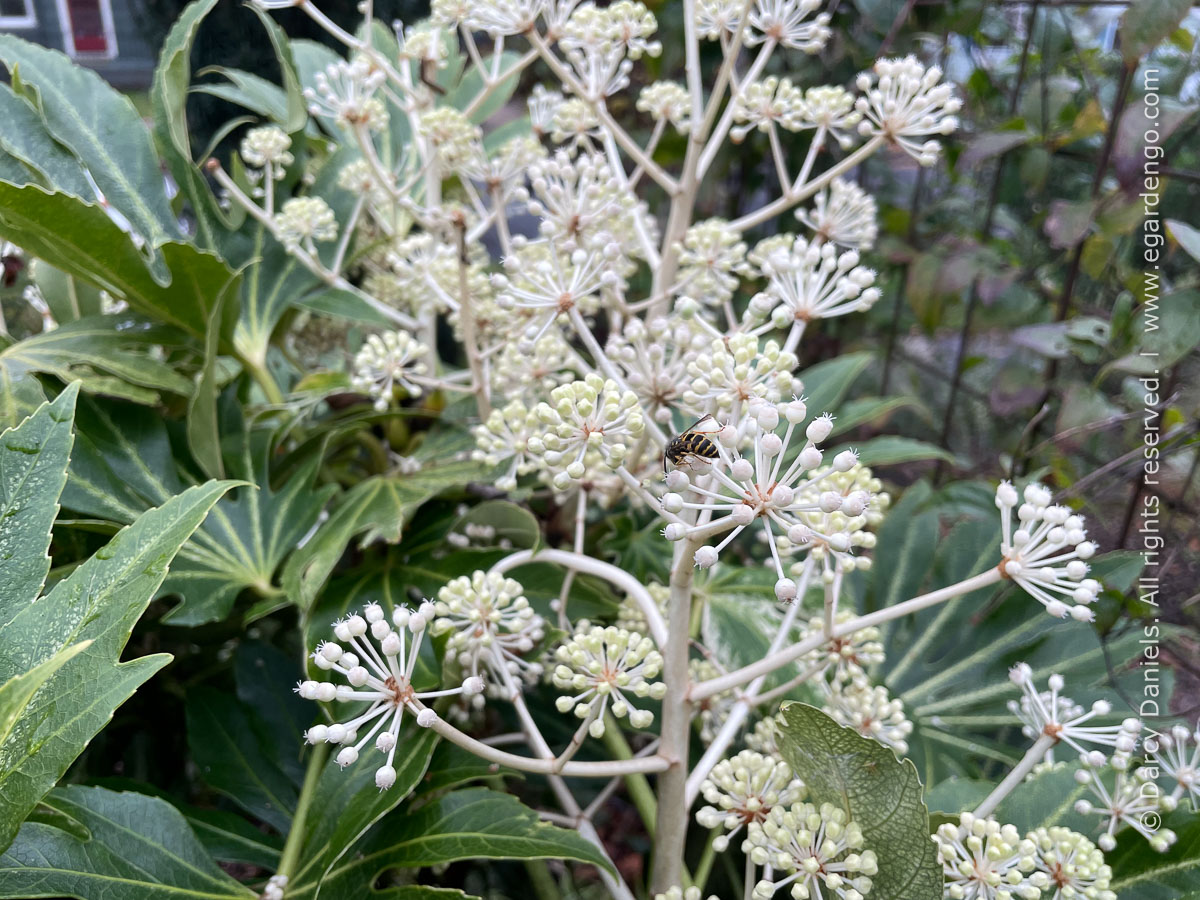
The flowers are unique, almost other-worldly. Ivory-white panicles appear in fall and into winter—a bit unusual in structure, but pollinators find them, and the black berries that follow add another layer of winter interest. If you need one shrub to hold the show through January in a shaded spot, this one does it.

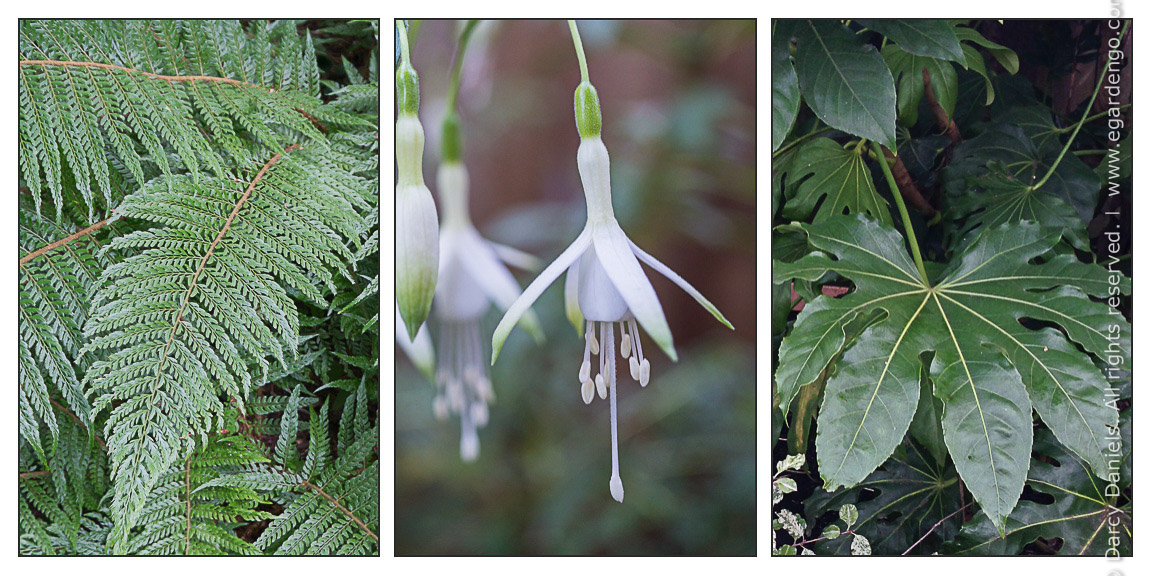
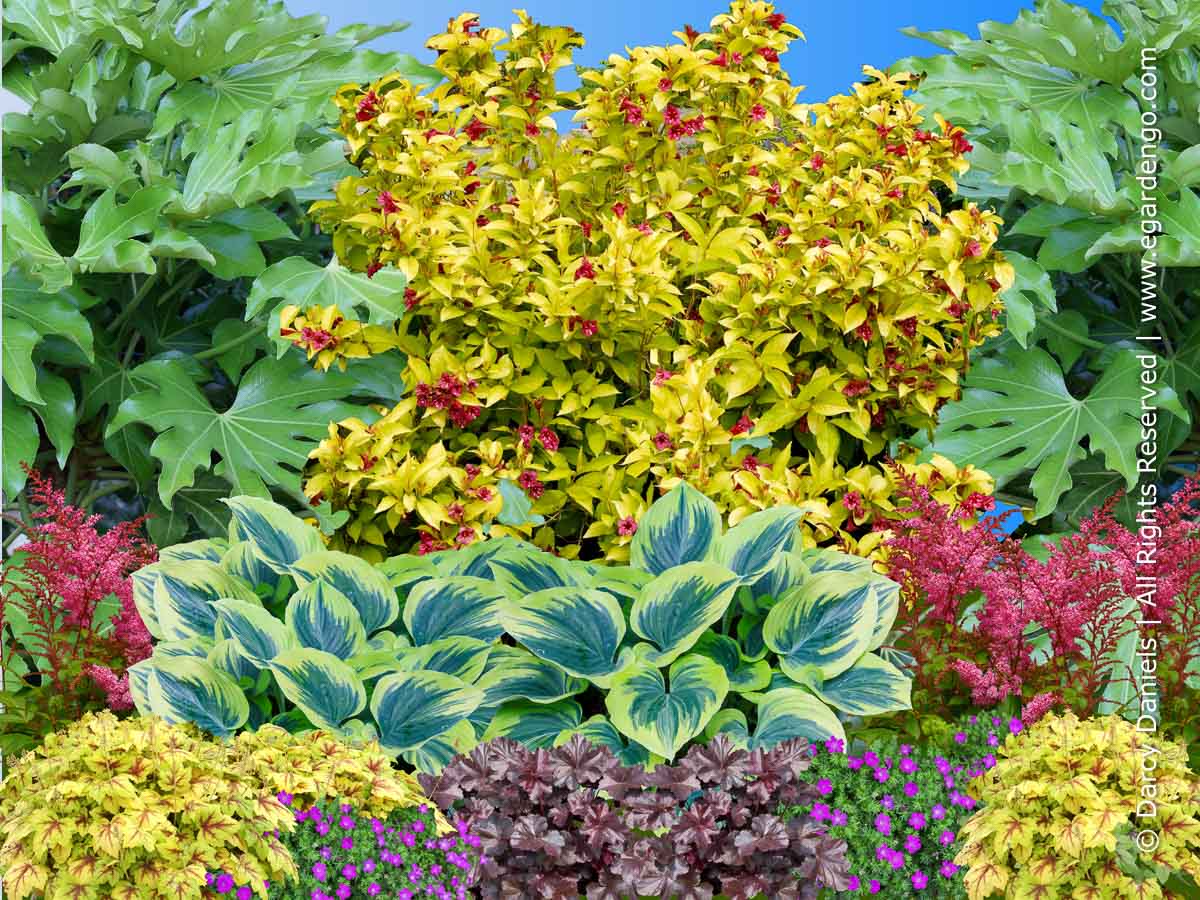
Pair it with something fine-textured—a fern, a sedge, a small-leafed groundcover—and the contrast makes both plants better. The classic move is fine and airy against bold and glossy. Lighter foliage nearby keeps it from going heavy in dim conditions. A chartreuse groundcover like Hakonechloa macra 'Aureola' or a variegated shrub like Buxus sempervirens 'Aureovariegata' light up the surrounding shade.

Three cultivars worth knowing:

Fatsia japonica 'Spider's Web' is slower-growing with white-speckled variegation that reads almost frosted—a natural brightener in darker spots. More compact than the species.

Fatsia japonica 'Murakumo nishiki' Camouflage™ takes things in a different direction: bold green-and-yellow variegation with a strong, vigorous habit. It earns its name—the patterning genuinely does look like camouflage. A strong grower and a real statement plant.

Fatsia japonica 'Variegata' offers cream-edged leaves—less bold than Camouflage™, more refined, with that same brightness in shade that all the variegated forms deliver.

The straight species remains the workhorse. Faster, larger, and more adaptable than the cultivars—the right choice when you need reliable bulk in a difficult spot. All four are worth growing; which one fits depends on the scale of the space and how much you want the foliage to announce itself.

Growing Conditions

Zone: 7, 8, 9, 10

Exposure: Full Shade, Part Shade, Deep Shade, Filtered Sun, Morning Sun, Open Shade

Water Needs: Drought-tolerant, Average, Occasional, Regular / Even

Description

Size: 48 - 120 tall x 60 - 120 wide
Shape / Form: Irregular, Rounded
Foliage Texture: Bold, Coarse
Foliage Quality: Bold, Coarse

Features: Attracts Bees, Attracts Birds, Drought-tolerant / Water wise, Attractive Foliage, Low Maintenance, Winter Interest

Foliage Color: Green

Flower Color: Ivory / Cream
Bloom Season: Jan, Nov, Dec, Winter
Flower Shape: Panicle

Fruit Description: White

Uses and Applications

Landscape Uses: Banks and Slopes, Container, Erosion Control, Hedges and Screens, Mixed Border, Small Gardens, Specimen, Structure / Foundation
Special Situations: Courtyard / Urban Garden, Deep Shade, Pollution Tolerant, Seaside / Salt Tolerant
Wildlife: Bees, Birds

More Design Considerations

Season of Interest: Winter, Spring, Summer, Fall, Year-round Interest, Three Seasons of Interest
Position / Role: mid-plane filler
Collections: eGardenGo Favorite, Great Plant Pick

Care and Maintenance

Maintenance Level: low
Plant Combos